


As we explained in a previous post ("The more carats... the better the ring?) the cut of a diamond is the most important quality to consider, as it plays a fundamental role in the final quality of the gemstone.
Today we are going to talk more in depth about the different types of gemstones that can be cut. But first, a brief note: the size and shape are not the same thing.
- The form The geometry of the stone is concerned with the geometry of the stone and is rather related to its outline. The most popular diamond is the round brilliant, very common in engagement rings. They are most notable for their brilliance, as they have more than 56 light-reflecting faces.
Diamonds that are not round are called 'fancy' diamonds and are also generally referred to as princess, marquise or emerald cuts, among others.
- The size assesses the light performance (reflective power and brilliance) and depends on several technical factors: on its proportions, symmetry and polish (general surface condition of a diamond's facets).

What sizes are available on the market?
- Glossy size
The brilliant cut is the best known and also the most valued. Diamonds are often confused with brilliants, but do you remember the post where we clarified the difference between diamonds and brilliants? Watch out, with this! We invite you to take a look at it: https://blascojoyero.com/brillante-y-diamante-son-lo-mismo/
Depending on whether the cut is good or very good, all the light that enters the stone manages to exit through the top, thus creating that sensational and eye-catching sparkle called 'dispersion'. This is why it happens to be the most widespread practice in jewellery.
- Princess size
Commonly seen in engagement rings where the diamond is completely square, sharp and with uncut corners. It is characterised by 76 facets and a brilliance comparable to that of a brilliant cut.
- Baguette size
Elongated, narrow and rectangular in appearance, like the famous French loaf of bread. Considered one of the most original carvings. However, as it has fewer facets, it shines less brightly.
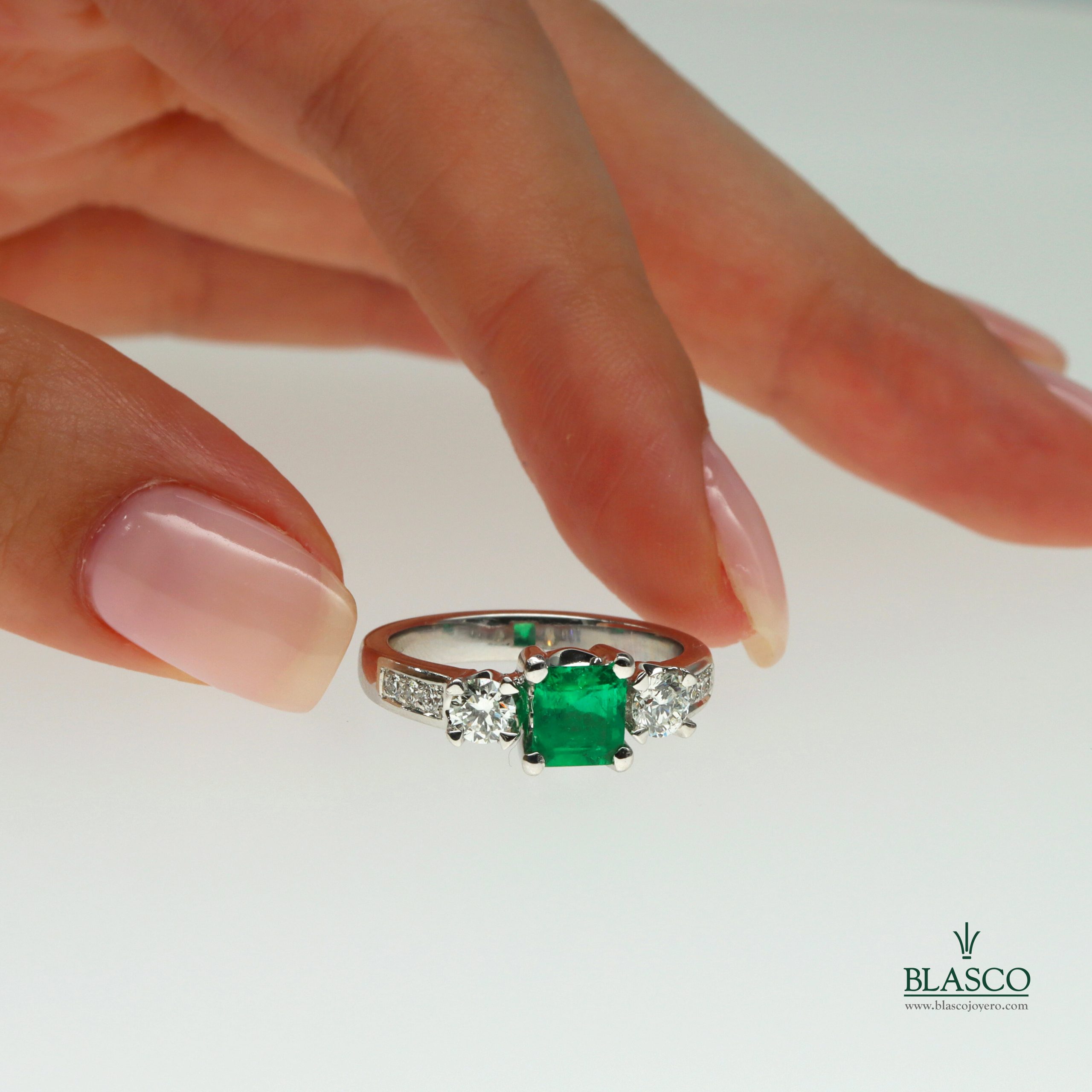
- Emerald size
One of the most striking due to its rectangular shapes and bevelled corners, resulting in an octagon with facets (between 48-50) parallel to each other. Also very popular in engagement rings.
- Oval diamond
One of the most beautiful ways to cut a diamond. Cutting the stone precisely, taking care of the elliptical lines is one of the traditional ways.
- Marquise size
It reminds us in the form of a smile. In fact, its name is linked to the smile of the Marquise de Pompadour.
- Heart size
We cut the stone or diamond so that they acquire that peculiar shape.
- Size asscher
Very similar to the emerald cut, but with the edges trimmed.
Although there is no "official catalogue" of sizes, the ones we have just listed and described are the most commonly seen in the sector. If you have any doubts, come and visit us at our shop in Calle Barítono Marcos Redondo, 3 (Murcia), we will be delighted to help you and advise you on everything you need!
